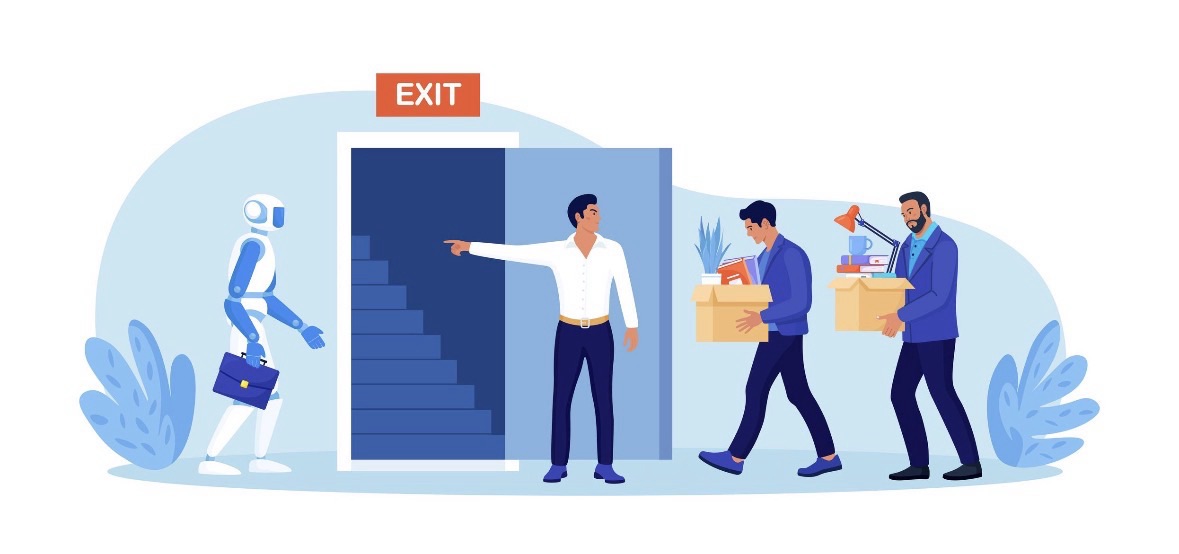
Artificial intelligence is no longer a futuristic concept discussed in tech circles. It is now deeply embedded in everyday business operations, decision-making processes, and workforce strategies. In 2026, AI has moved from being a competitive advantage to a fundamental requirement for companies that want to survive and scale.
This shift is creating a massive transformation in the global job market. Roles that once seemed stable are disappearing or evolving at a pace most people are not prepared for. While previous technological revolutions automated physical labor, this one is targeting cognitive work, including tasks that require analysis, communication, and even creativity.
The uncomfortable truth is that many people are still underestimating how quickly this change is happening. AI is not just impacting large corporations or tech companies. It is affecting small businesses, freelancers, and professionals across nearly every industry.
However, this transformation is not purely negative. It presents one of the greatest opportunities in modern history for those who are willing to adapt, learn, and reposition themselves strategically.
This article breaks down exactly which jobs are most at risk, why they are vulnerable, and most importantly, how you can future-proof your career in an AI-driven world.
Why AI Is Replacing Jobs So Quickly
To understand which jobs are at risk, you first need to understand why AI is so effective at replacing certain types of work.
AI excels in four key areas:
Speed and efficiency
AI systems can process massive amounts of data in seconds, completing tasks that would take humans hours or days.
Consistency and accuracy
Unlike humans, AI does not get tired, distracted, or make frequent errors when performing repetitive tasks.
Scalability
One AI system can replace the workload of dozens or even hundreds of employees simultaneously.
Cost reduction
For companies, replacing human labor with AI often leads to significant long-term savings.
Because of these advantages, businesses are aggressively adopting AI wherever possible. The result is a rapid decline in roles that involve predictable, repeatable work.
Jobs Most Likely to Be Replaced by AI
1. Data Entry and Administrative Roles
Data entry has become one of the most vulnerable job categories. AI systems can extract, organize, and input data far more efficiently than humans.
Administrative roles are also being heavily impacted. Tasks such as scheduling meetings, managing emails, and organizing documents are now handled by AI-powered assistants.
Examples of affected roles include:
- Data entry clerks
- Administrative assistants
- Office coordinators
These positions are particularly at risk because they rely on structured processes that AI can easily replicate.
2. Customer Service and Support
Customer service has undergone a major transformation with the rise of AI chatbots and virtual assistants. These systems can handle thousands of customer interactions simultaneously, providing instant responses at any time of day.
AI is now capable of:
- Answering common questions
- Resolving basic issues
- Routing complex cases to human agents
As a result, many companies are reducing their reliance on human customer service representatives.
Roles being affected include:
- Call center agents
- Live chat support staff
- Technical support representatives (entry-level)
While human agents are still needed for complex or sensitive situations, the overall demand for these roles is declining.
3. Retail and Cashier Jobs
Retail is another industry experiencing rapid automation. Self-checkout systems and AI-powered stores are reducing the need for cashiers and floor staff.
In some locations, fully automated stores allow customers to walk in, pick up items, and leave without interacting with a human employee.
Jobs at risk include:
- Cashiers
- Retail associates
- Inventory clerks
This trend is expected to continue as technology becomes more affordable and widely adopted.
4. Transportation and Delivery
Advancements in autonomous vehicles are beginning to impact transportation-related jobs. While full automation is not yet universal, progress is accelerating.
Roles that may be affected in the near future include:
- Truck drivers
- Delivery drivers
- Taxi and rideshare drivers
Even partial automation, such as driver-assist systems, is reducing the number of human workers required.
5. Basic Finance and Accounting
AI is transforming the finance industry by automating tasks such as bookkeeping, transaction processing, and financial reporting.
Modern AI systems can:
- Track expenses
- Generate reports
- Detect anomalies and fraud
As a result, entry-level accounting roles are becoming less common.
Jobs at risk include:
- Bookkeepers
- Accounting clerks
- Payroll administrators
Higher-level financial professionals who focus on strategy and analysis are less affected.
6. Entry-Level Tech Jobs
Ironically, even the tech industry is not immune to AI disruption. Tools that can generate code, debug programs, and build applications are reducing the need for junior developers.
AI can now:
- Write basic code
- Suggest improvements
- Automate testing
This does not mean developers are obsolete, but it does mean the bar for entry-level positions is rising.
7. Content Creation and Writing
AI-generated content has improved significantly in recent years. It can now produce articles, marketing copy, and even creative writing at scale.
Roles most affected include:
- Basic content writers
- Copywriters focused on repetitive tasks
- Proofreaders and editors
However, high-quality, original content that requires deep thinking and unique perspectives still relies on human creators.
The Pattern Behind Job Displacement
If you look closely, every job at risk shares common characteristics.
These jobs are:
- Repetitive
- Rule-based
- Predictable
- Easy to standardize
If a task can be broken down into a clear set of instructions, AI can likely learn to perform it.
This is the key principle that determines whether a job is vulnerable.
Jobs That Are Safer in the Age of AI
While many roles are being replaced, others remain relatively secure due to the nature of the work involved.
1. Skilled Trades
Jobs that require physical labor and hands-on expertise are difficult to automate.
Examples include:
- Electricians
- Plumbers
- Construction workers
These roles require adaptability and problem-solving in real-world environments, which AI struggles to replicate.
2. Healthcare Professionals
Healthcare relies heavily on human judgment, empathy, and interpersonal interaction.
Roles such as:
- Nurses
- Doctors
- Therapists
are less likely to be fully replaced, although AI will continue to assist in diagnostics and data analysis.
3. Leadership and Management
Leadership involves decision-making, emotional intelligence, and strategic thinking.
Managers who can:
- Lead teams
- Make complex decisions
- Navigate uncertainty
will remain valuable in an AI-driven world.
4. Creative and Strategic Roles
True creativity and innovation are still areas where humans have an advantage.
Jobs that involve:
- Original thinking
- Brand strategy
- High-level problem-solving
are less likely to be automated.
How to Avoid Being Replaced by AI
Understanding the risks is only the first step. The real question is how to position yourself for long-term success.
1. Learn How to Use AI
The most effective way to stay relevant is to become proficient with AI tools.
Instead of competing with AI, you should:
- Use it to increase productivity
- Automate repetitive tasks
- Enhance your output
People who can leverage AI effectively will outperform those who ignore it.
2. Develop a Skill Stack
Relying on a single skill is becoming increasingly risky. Instead, focus on combining multiple skills to create a unique profile.
For example:
- Writing + SEO + AI tools
- Coding + product thinking + communication
- Marketing + analytics + automation
This approach makes you more adaptable and harder to replace.
3. Focus on High-Value Work
Shift your focus away from tasks that can be automated and toward work that requires human insight.
High-value skills include:
- Critical thinking
- Decision-making
- Problem-solving
- Communication
These abilities are difficult for AI to replicate and are highly valued by employers.
4. Move Up the Value Chain
Instead of performing basic tasks, aim to take on roles that involve oversight and strategy.
This means:
- Managing systems rather than operating them
- Designing processes instead of following them
- Leading projects instead of executing small tasks
The higher you move, the less replaceable you become.
5. Build a Personal Brand
In a world where AI can replicate skills, reputation becomes a powerful differentiator.
Building a personal brand involves:
- Sharing knowledge online
- Creating content
- Engaging with your industry
When people recognize your name and expertise, you become more than just another replaceable worker.
6. Commit to Continuous Learning
The pace of change is accelerating. Skills that are valuable today may become outdated within a few years.
To stay ahead:
- Learn new tools regularly
- Stay informed about industry trends
- Invest in education and training
Adaptability is one of the most important traits in the modern workforce.
The Biggest Mistakes People Are Making
Many individuals are making critical errors that increase their risk of being replaced.
These include:
- Ignoring AI altogether
- Relying on outdated skills
- Avoiding change
- Underestimating the speed of disruption
These mistakes can lead to sudden job loss and difficulty finding new opportunities.
The Future of Work
The future of work is not about humans versus AI. It is about humans working alongside AI.
Key trends include:
- Increased automation of routine tasks
- Greater demand for high-skill workers
- Fewer entry-level opportunities
- More emphasis on adaptability
While some jobs will disappear, new roles will emerge that we cannot fully predict yet.
Final Thoughts: Adaptation Is No Longer Optional
AI is reshaping the job market at an unprecedented rate. The traditional idea of job security is being replaced by a new reality where adaptability is the most valuable asset.
The people who succeed in this new environment will not necessarily be the most experienced or the most educated. They will be the ones who are willing to learn, evolve, and embrace change.
If you take action now, you can position yourself ahead of the curve. If you wait, you risk being left behind.
The choice is simple but critical.
You can resist the changes brought by AI and struggle to keep up, or you can adapt, learn how to use these tools, and build a career that thrives in the new economy.
The future is not something that happens to you. It is something you prepare for.
Start now.

 Tech Nova